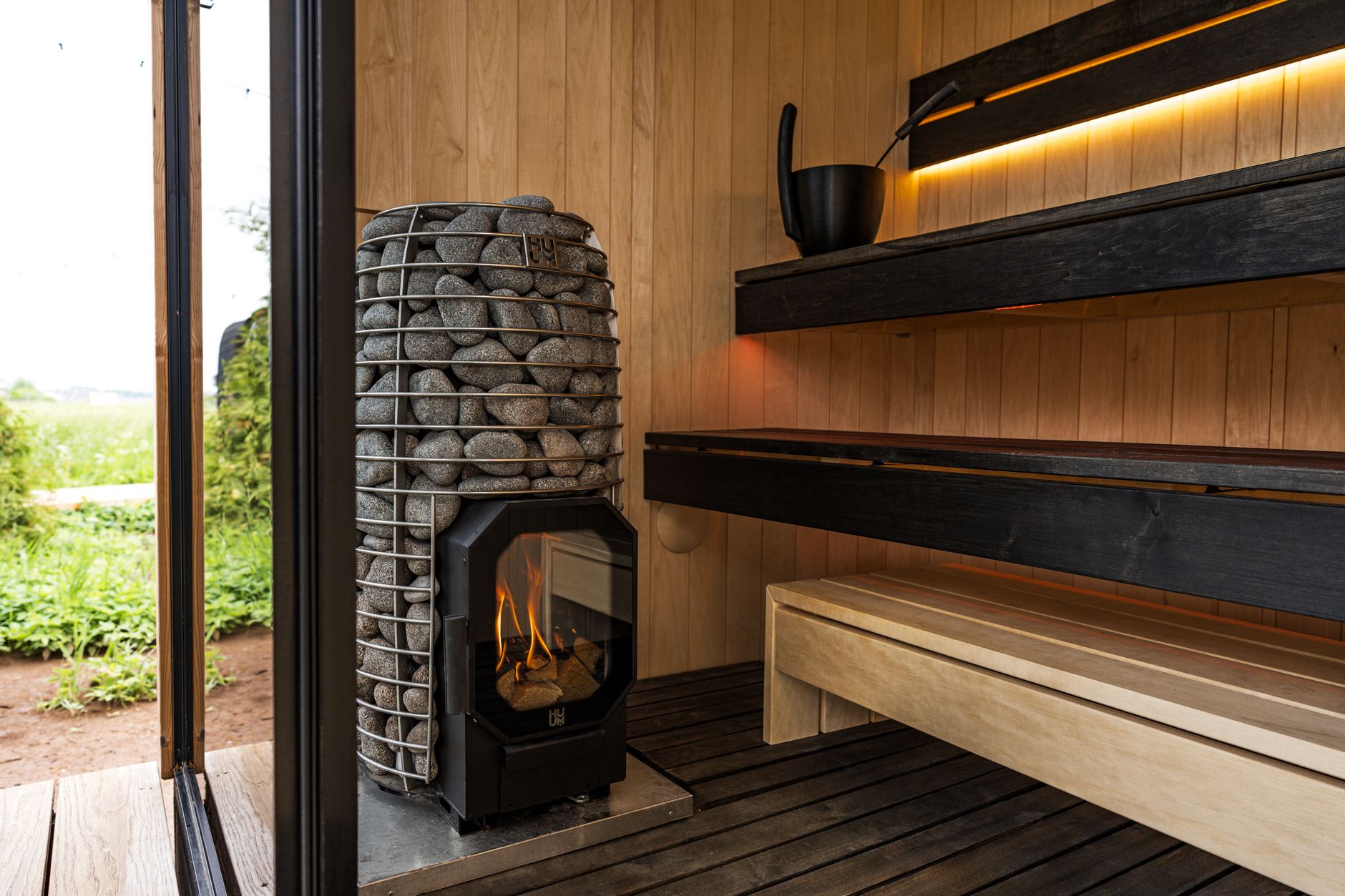
A nordic bath is a large hot water tub, designed for year-round outdoor use, which differs from a jet spa through calm water and prolonged immersion rather than massaging jets. Popularised in France by Scandinavian-style chalets and mountain lodges, it fits as naturally into a private garden as into certain wellness venues. This guide covers how it works, its benefits, the available heating systems and materials, the price of a unit and the rules for maintaining the water.
Comparing nordic baths by material and heating system
Choosing a nordic bath mainly comes down to the tub material and the heating system, which together determine the budget and the day-to-day upkeep. Here is an indicative price range, excluding delivery and accessories.
| Tub type | Heating | Indicative price | Maintenance |
|---|---|---|---|
| Wood (spruce, larch) | Wood stove | 1,500 to 2,500 euros | Regular wood and water treatment |
| Fibreglass | Electric or hybrid | 3,000 to 6,000 euros | Water maintenance only, non-porous tub |
| Acrylic | Electric | 2,500 to 5,000 euros | Water maintenance, close to a standard spa |
| Inflatable or portable | Electric | 500 to 1,200 euros | Frequent draining, less insulating |
A wood-fired model is often cheaper to buy, but needs a steady supply of dry wood and takes longer to heat up than an electric or hybrid model, which reaches temperature faster at the cost of a higher electricity bill.
What exactly is a nordic bath?
A nordic bath is a round or square hot water tub, usually built to seat two to eight people, deep enough for immersion up to the shoulders. Unlike a jet spa, it produces no bubbles or hydro-massage: the water stays calm, and the experience relies on heat and the length of immersion rather than on water jets.
The term covers several related but distinct uses, often confused in reader searches.
Nordic bath, spa and hot tub: what is the difference?
An indoor spa or hot tub works with water or air jets that massage the body, in water usually kept between 36 and 38 degrees. A nordic bath heats up more gradually, often reaches 38 to 40 degrees, and is mainly used outdoors, in both summer and winter. Hammams and spas also have differences worth knowing before choosing a wellness experience that fits your expectations.
Nordic bath and outdoor sauna
A sauna, whether traditional or Finnish, uses dry heat (70 to 100 degrees) and is used while sitting, without immersion in water. A nordic bath, by contrast, is experienced fully immersed, at a much lower temperature. Many nordic bath enthusiasts combine both practices, alternating a sauna session with a soak in the tub.
What are the benefits of a nordic bath?
Prolonged immersion in hot water triggers vasodilation that relaxes muscles and promotes a sense of calm, comparable to other moist-heat practices such as the hammam, whose documented benefits rest on a similar mechanism. The heat also helps release tension built up after a day on your feet or a physical effort.
Some users alternate a hot nordic bath with a cold bath or an ice-cold shower, a practice associated by athletes with a perceived faster muscle recovery. The scientific evidence available on this point remains partial and does not support a general medical recommendation: the practice is mostly about comfort and relaxation, not treatment.
Hot-cold contrast, a practice of its own
Alternating between a hot bath and a cold immersion, sometimes called contrast bathing, means spending a few minutes in the nordic bath, then briefly immersing in cold water, a dedicated cold tub or an ice-cold shower, before returning to the heat. This practice, inherited from Scandinavian and Baltic traditions where sauna and cold bathing have long been combined, triggers a succession of vasodilation and vasoconstriction that many enthusiasts describe as invigorating. It calls for a cautious build-up: start with short exposures to cold, never push through discomfort, and stick to heat alone if in doubt about your tolerance to thermal shock.
Which heating system should you choose for a nordic bath?
Three heating systems coexist, each with its own constraints.
The wood stove
The most traditional option, a wood stove heats the water in 2 to 4 hours depending on the tub’s volume and the outdoor temperature. It needs no electrical connection, which makes installation easier in a garden far from a power outlet, but requires a steady supply of dry wood and supervision while heating.
Electric heating
An immersed heating element or an electric heat exchanger heats the water faster and more consistently, with a thermostat that keeps the chosen temperature steady. This solution suits frequent use, at the cost of an electricity bill to factor into the running budget.
Hybrid heating
Some models combine a wood stove with a backup electric element, to heat quickly then maintain the temperature without tending a fire continuously. This option, pricier to buy, reduces wood consumption with regular use.
Which materials for a nordic bath tub?
Wood (Nordic spruce or larch) remains the traditional material, valued for its natural look and thermal insulation, but it needs periodic treatment against moisture and UV exposure. Fibreglass and acrylic, more recent on this market, offer a non-porous tub that is easier to clean and unaffected by freeze-thaw cycles, at the cost of a less traditional look.
Installation, regulations and water maintenance
Outdoor installation rules
For private use, a small basin such as a nordic bath generally falls outside the planning rules that apply to pools over 10 square metres, but this depends on the local municipality and on whether a fixed shelter is added: it remains worth checking the applicable rules on service-public.gouv.fr or directly with the town hall before installation, especially in a protected area.
Water treatment
A nordic bath, filled with static water rather than constantly renewed like a swimming pool, is treated like a hot tub: a disinfectant (chlorine or bromine) keeps a sufficient residual level to limit bacterial growth, and pH is checked at regular intervals. Anses, the French agency for food, environmental and occupational health safety, has published recommendations on the microbiological risks specific to pools and hot tubs, which apply equally to a nordic bath used regularly. A full drain, followed by cleaning the tub, is needed several times a year depending on how often it is used and the number of bathers.
How to choose your nordic bath
- Capacity and size: a two-person model is usually between 1.5 and 1.8 metres in diameter, compared with 2 metres or more for a family tub seating six to eight. The larger the diameter, the more water needs heating, which lengthens wood-fired heating time and raises electricity use for a resistance-heated model.
- How to access one: buying a nordic bath for regular use at home, or booking a one-off session at a wellness venue that offers one, to try the experience before investing.
- Overall budget: on top of the purchase price come wood or electricity, water maintenance products, and possibly an insulated cover that reduces heat loss between uses.
- Location: easy access for wood deliveries, a stable, level area, and some privacy from neighbours if the tub will be used often.
For a first experience without any investment, several private spa venues now offer a nordic bath alongside their usual treatments, much like a hammam or sauna. Comparing prices charged by luxury spas in Paris or checking a comparison of booking platforms helps find a suitable offer before booking a session.
Frequently asked questions
What exactly is a nordic bath?
A nordic bath is a large hot water tub, made of wood, fibreglass or acrylic, heated by a wood, electric or hybrid stove, and designed for year-round outdoor use. Unlike a jet spa, it relies on prolonged immersion in calm, hot water, often paired with a cold bath for contrast.
What are the benefits of a nordic bath?
Hot water immersion promotes muscle relaxation, vasodilation and a sense of well-being similar to a long hot bath or a hammam session. Alternating with a cold phase, practised by some enthusiasts, is associated by athletes with faster recovery, though available studies remain too limited to support a general medical claim.
How long should you stay in a nordic bath?
A session usually lasts between 15 and 30 minutes, enough time to enjoy the heat without causing overheating or dehydration. It is recommended to drink water before and after, to step out at the first sign of dizziness or palpitations, and to avoid long sessions during hot weather.
How much does a nordic bath cost?
Price mainly depends on the tub material and heating system: a wood-fired wooden model starts around 1,500 to 2,500 euros, while a fibreglass model with hybrid heating typically costs between 3,000 and 6,000 euros. Delivery, installation and accessories such as an insulated cover or filtration add to the total, depending on the model.
How do you maintain the water in a nordic bath?
The water is treated like that of a hot tub: a disinfectant (chlorine or bromine) keeps a sufficient residual level, pH is checked regularly, and the water is fully replaced several times a year depending on how often the tub is used. Anses, the French food and health safety agency, recommends regular monitoring of these parameters to limit the microbiological risks specific to hot tubs.
What are the contraindications for a nordic bath?
Unstabilised heart conditions, uncontrolled high blood pressure, pregnancy and severe circulatory disorders call for medical advice before any session. Drinking alcohol before or during immersion increases the risk of feeling unwell and is not recommended.