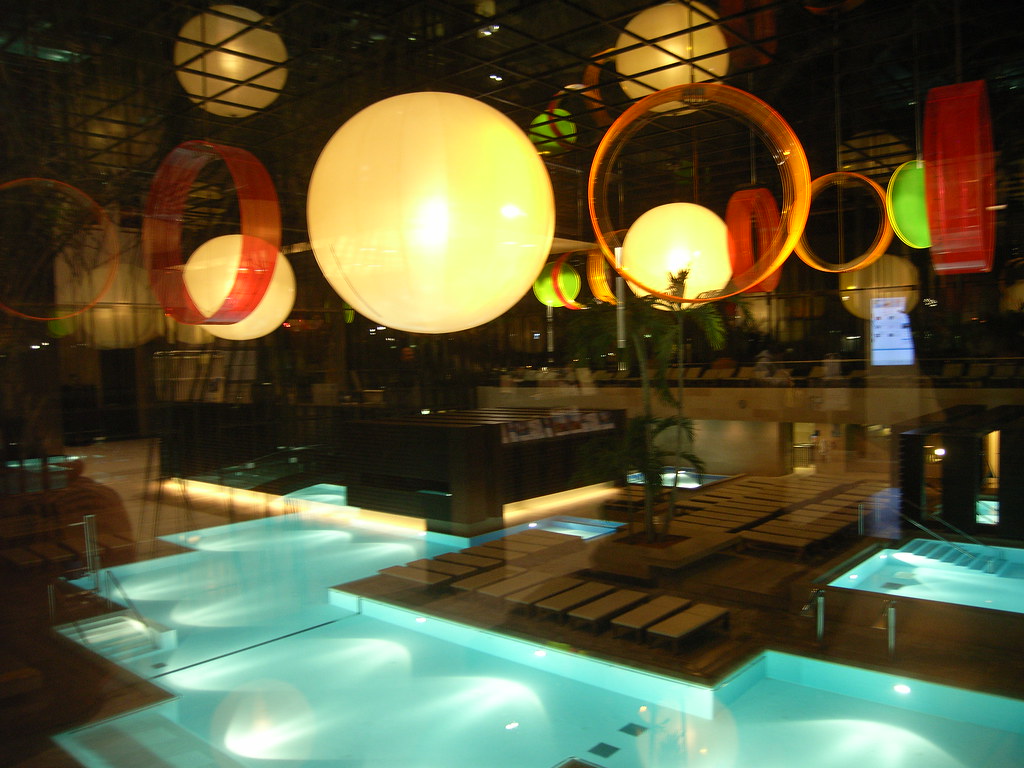
Hammam or spa — the difference between these two wellness spaces is frequently misunderstood. Both offer relaxation and rest, but they rely on radically distinct physiological principles: moist steam for one, hydrotherapy in a heated basin for the other. Understanding these differences makes it easier to choose the format best suited to one’s goals and physical condition.
Hammam and spa: two distinct wellness spaces
The hammam, also known as a Turkish bath or steam bath, is a room saturated with water vapour, maintained between 40 and 50 degrees Celsius with a humidity level close to 100%. The heat is described as moist: it envelops the body, gradually opens the skin’s pores and encourages gentle perspiration without irritating the airways. Originating in Turkey and the Maghreb, the hammam has historically integrated a complete ritual: sweating on a heated marble slab, exfoliation with black soap (kessa), and rinsing with lukewarm water.
The spa, whose etymology points to the Latin expression “salus per aquam” (health through water), refers in its technical sense to an individual or shared heated water basin, warmed between 36 and 40 degrees, fitted with nozzles and jets that produce hydrotherapy effects. The term is also used more broadly to describe a complete wellness area (pool, hammam, sauna, treatment rooms), which regularly creates confusion in everyday usage.
The main differences between hammam and spa
Temperature, humidity and type of heat
The fundamental divergence between hammam and spa lies in the type of heat delivered. In a hammam, the air is saturated with vapour: the temperature remains moderate (40-50 degrees) but the relative humidity reaches 100%, producing abundant perspiration without physical effort. In a spa, the warm water (36-40 degrees) acts directly on the body: the jets exert pressure on muscles and joints, while the ambient air around the basin remains relatively dry.
Ritual and sensory experience
A hammam session generally follows a structured protocol: progressive entry into the heated room, sweating on marble benches, black soap or exfoliation mitt scrub, rinse with fresh or lukewarm water. This sequence is often collective in a traditional public hammam, or private in upmarket spaces. A spa offers a different, more individualised experience: immersion in the basin, activation of cervical, lumbar and plantar nozzles, relaxation in the bubbling water at a stable temperature.
Equipment and installation
A traditional hammam requires a waterproof room, tiling or marble, a steam generator and an adequate ventilation system. Its installation is more complex and its setup cost higher. A spa (jacuzzi) is a self-contained electric unit, waterproof, that can be installed indoors or outdoors on a terrace. However, the chemical maintenance of the water (pH, chlorine or bromine) is more frequent than for a hammam.
Hammam, spa and sauna: comparison table
| Criterion | Hammam | Spa (jacuzzi) | Sauna |
|---|---|---|---|
| Type of heat | Moist | Warm water | Dry |
| Temperature | 40-50 degrees | 36-40 degrees (water) | 70-100 degrees |
| Humidity | 100% | Liquid water | 10-20% |
| Origin | Arabic, Turkish | Latin, Belgian | Nordic (Finnish) |
| Main effect | Opens pores, gentle sweating | Hydrotherapy, muscle relaxation | Intense sweating, deep relaxation |
| Main contraindications | Low blood pressure, pregnancy, heart failure | Pregnancy, cardiovascular disease | Low blood pressure, pregnancy |
The benefits of the hammam for skin and health
Hammam steam has a recognised effect on skin and the circulatory system. Moist heat opens the skin’s pores, facilitating the removal of impurities and dead cells during exfoliation. Regular use contributes to a more even complexion and smoother skin texture, provided it is paired with good post-session moisturisation. People with psoriasis often report a significant reduction in flaking after several weekly sessions, as the moist heat plays a soothing role on plaques.
At the muscular level, moist heat relaxes tense fibres and relieves mild joint pain. The airways also benefit from the humidity-saturated air, which can temporarily ease sinus conditions or mild bronchial irritation.
A dedicated article covers hammam benefits in detail, including the flow of a typical session and the contraindications to know before starting.
The strengths of the spa for muscle relaxation
A spa (jacuzzi) works primarily through hydrotherapy: the jets generated by the nozzles exert targeted pressure on muscle groups. The warm water dilates blood vessels and promotes local circulation, accelerating recovery after physical exertion. A 20 to 30-minute spa session effectively reduces lumbar and cervical tension, the most common areas of tightness among working adults.
Jet pressure is generally adjustable: low for overall relaxation, high for targeted work on a specific muscular knot. In upmarket establishments, programmes alternating warm and cold jets optimise vasomotor effects. To combine a spa with a private treatment room session, some establishments offer a complete circuit including a californian massage, an enveloping massage recognised for its ability to significantly reduce stress levels.
Hammam or spa: which to choose based on your profile
The choice between hammam and spa depends on the goals sought and one’s physical condition:
- For skin and purification: the hammam is superior. Moist steam cleanses deeply, opens the pores and prepares the skin for the action of black soap.
- For muscle recovery: the spa is more effective. Hydrotherapy jets target areas of tension with precision.
- For heat sensitivity: the hammam is better tolerated by those who avoid very high temperatures, as its heat is more moderate than a sauna.
- For a shared or convivial experience: mother-daughter spa day packages illustrate how a space combining hammam, jacuzzi and treatments can become a complete shared moment.
- For home installation: the spa (jacuzzi) is more accessible in terms of floor space and setup requirements.
Alternating the two during the same visit is perfectly possible and recommended: starting with the hammam (sweating, opening pores), then finishing in the spa (hydrotherapy, recovery) maximises the effects of both pieces of equipment. The total duration should not exceed 1.5 to 2 hours, with regular hydration between sequences.
Frequently asked questions
What is the main difference between a hammam and a spa?
A hammam uses moist heat (40-50 degrees, 100% humidity) produced by steam in an enclosed room. A spa is a heated water basin (36-40 degrees) fitted with hydrotherapy jets. One acts through steam on the skin and airways, the other through direct water pressure on the muscles.
What is a wet sauna and how does it differ from a hammam?
A wet sauna generally refers to a hammam (steam bath). By contrast, a classic sauna delivers dry heat at 70 to 100 degrees with only 10 to 20% humidity. The hammam is gentler on the airways and better tolerated by those sensitive to dry heat.
Is a hammam beneficial for skin problems?
Hammam steam improves skin texture: it opens pores, facilitates exfoliation and reduces psoriasis-related flaking after several regular sessions. For sensitive or acne-prone skin, it is advisable to avoid aggressive scrubbing and to moisturise the skin after the session.
Hammam or sauna: which should you use first during a wellness session?
It is generally recommended to start with the hammam: the gentle, moist heat progressively prepares the body, opens the pores and relaxes the muscles. The sauna, hotter and drier, can follow for a more intense sweat. Ending with a cool shower or a spa session rounds off the circuit optimally.
Can you use both a hammam and a spa in the same session?
Yes, the combination is recommended in many wellness circuits. The advised order is: hammam (sweating, opening pores), lukewarm shower, then spa (hydrotherapy, muscle relaxation). The total duration should not exceed 1.5 to 2 hours to avoid dehydration. Drinking water regularly between sequences is essential.